
Exodus 34:4–6, 8–9; Daniel 3:52–56; 2 Corinthians 13:11–13; John 3:16–18
God Is One, Yet Revealed in Three Persons
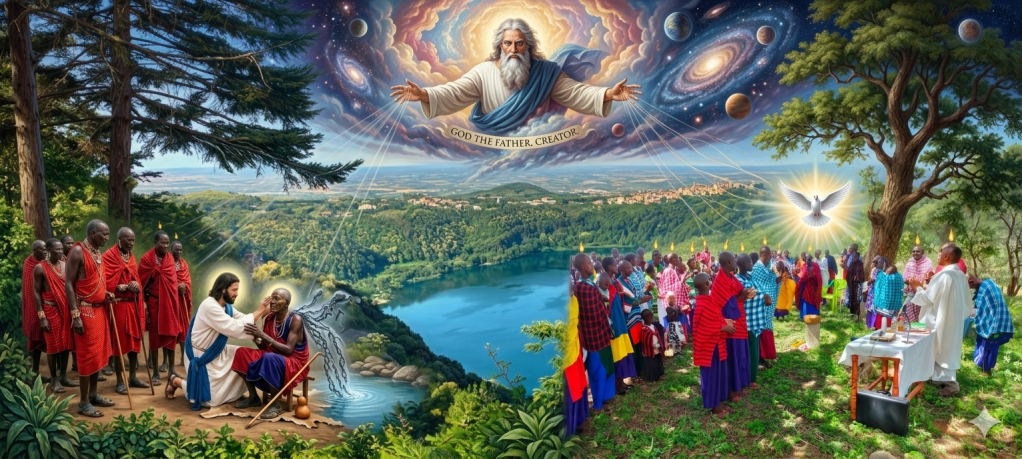
Dear friends, today the Church celebrates the great Feast of the Holy Trinity, celebrated on the Sunday after Pentecost. Next Sunday, we shall celebrate the Feast of Corpus Christi — the Body and Blood of Christ. The word “Trinity” comes from the Latin Trinitas, meaning “threefold.” Through divine revelation in Sacred Scripture, Christians encounter the one God in three Persons: God the Father, God the Son, and God the Holy Spirit. The Feast of the Holy Trinity is therefore a celebration of God’s closeness to humanity and his desire to share his divine life with us.
The mystery of the Trinity is not a mathematical puzzle to be solved but a relationship of love into which we are invited. God reveals himself not as isolation, but as communion — a perfect unity of love between the Father, the Son, and the Holy Spirit.
In the Old Testament, God reveals himself as Creator, protector, sustainer, and guide of his people. He blesses, corrects, revives, and leads them back whenever they stray from his ways. After the fall of Adam and Eve, humanity lost its original friendship with God. Human beings became wounded by sin and could no longer consistently choose what is good by their own strength. Theology refers to this wounded inclination as concupiscence.
The experience of Israel in Egypt reflects this human condition. As slaves, they were forced to submit to the will of their masters without freedom. Even after their liberation through Moses, the wounds of sin remained within them. That is why God gave Moses the commandments on Mount Sinai — not to burden his people, but to guide them. God’s commandments are not chains that imprison us; they are light for our path. Left to ourselves, we easily confuse good with evil, truth with falsehood, and freedom with selfishness.
In the second reading, St. Paul gives us one of the clearest Trinitarian blessings in Scripture: “The grace of the Lord Jesus Christ, the love of God, and the fellowship of the Holy Spirit be with you all.” Paul constantly reminded the early Christians that the Triune God accompanied the mission of the Church. The Father pours out his love through the saving grace of Christ, while the Holy Spirit unites believers and strengthens the Church in her mission.
The Creed that we recite every Sunday beautifully explains the identity and mission of each Person of the Trinity.
“I believe in one God, the Father almighty, maker of heaven and earth, of all things visible and invisible.” Through the Old Testament, God the Father reveals himself as Creator and sustainer of all existence.
“I believe in one Lord Jesus Christ, the Only Begotten Son of God… through him all things were made. For us men and for our salvation he came down from heaven.” Jesus Christ is the visible image of the invisible God. In Christ, God entered human history and drew close to humanity so that we might share in divine life.
“I believe in the Holy Spirit, the Lord, the giver of life, who proceeds from the Father and the Son.” The Holy Spirit is the source of life, unity, and holiness. He binds the Church to the Father and the Son and continues the saving work of Christ in the world.
Every action of God is the action of the one God. Yet we encounter him in this mysterious threefold way. At creation, God said, “Let us make man in our image and likeness” (Gen 1:26). Scripture tells us that the Spirit of God hovered over the waters, while all things were created through the eternal Word, the Son of God.
The Trinity is also revealed at the baptism of Jesus. The Son stands in the Jordan River, the Holy Spirit descends like a dove, and the voice of the Father proclaims: “This is my beloved Son.” After Pentecost, the Church entered the age of the Holy Spirit, who continues to guide believers into truth and holiness. As Jesus promised, “When the Spirit of truth comes, he will guide you into all truth” (Jn 16:13).
Why did God reveal himself as Trinity? Because God is love. Within God himself there is an eternal exchange of love between the Father, the Son, and the Holy Spirit. God created humanity to participate in that love. Human life, family life, and Christian community are all meant to reflect this Trinitarian communion. Do your family or your community reveal the love that seamlessly binds all the members together?
God created man and woman and blessed them to bear fruit through love and unity. In this way, humanity participates in God’s creative work. Love by its nature is never selfish or closed in on itself. True love reaches outward; it gives life, heals wounds, restores dignity, and creates communion. Genuine love does not dominate or suffocate another person’s freedom. Any relationship that seeks to possess, manipulate, or destroy freedom contradicts the very nature of divine love. Is your relationship suffocating you?
Our communities are called to reflect the unity of the Trinity. Where love exists, division, hatred, corruption, selfishness, and violence lose their power. Love heals brokenness and reconciles enemies. Unfortunately, the modern world increasingly promotes individualism and self-interest. The family — which is designed to mirror Trinitarian love — is under serious attack. Even religious communities are sometimes weakened by selfish ambition and lack of fraternity.
For this reason, Christians are called urgently to become witnesses of communion, reconciliation, and sacrificial love. The world desperately needs communities that reflect the unity, harmony, and life of the Holy Trinity.
Dear friends, as we celebrate the mystery of the Holy Trinity, let us learn to live unity in diversity. May our families, parishes, and communities become living reflections of the love shared by the Father, the Son, and the Holy Spirit. And may the grace of our Lord Jesus Christ, the love of God, and the fellowship of the Holy Spirit remain with us always.
Happy Feast.
Fr. Lawrence Muthee, SVD

