

Isaiah 55:6–9; Psalm 145; Philippians 1:20–24, 27; Matthew 20:1–16
Generosity vs. Jealousy
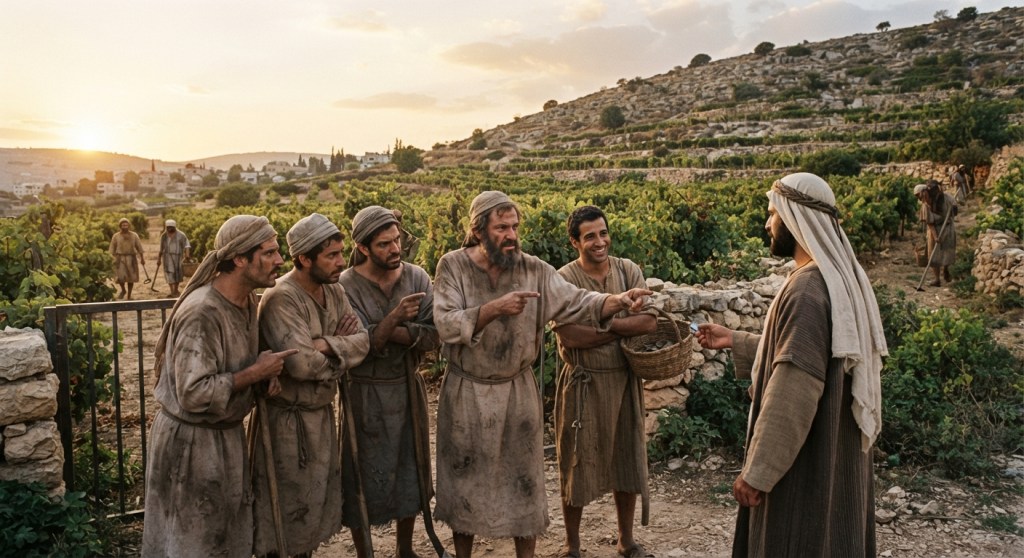
Dear friends, today is the 25th Sunday in Ordinary Time. Our theme today is Generosity vs Jealousy. In the Gospel, Jesus gives us the parable of the workers in the vineyard. The story introduces us to a group of labourers who become angry because the landowner is generous to those who arrived late.
The landowner agrees with the first workers on a specific daily wage. Throughout the day, he continues to hire other workers—some at the third hour, others at the sixth and ninth hours, and finally some at the eleventh hour. At the end of the day, everyone receives the same wage.
The workers who had laboured all day feel that the landowner had treated them unfairly. From their perspective, those who worked only for a short time should have received less. If the latecomers were given a full day’s wage, they reasoned, those who had worked longer should have received more. But Jesus turns the logic of the story upside down.
The landowner reminds them that he had not cheated them. He had given them exactly what they agreed to receive. His generosity towards others does not constitute injustice towards them. There is also something important about those who came late. They had not necessarily been lazy. They had been standing in the marketplace because nobody had hired them. When the landowner found them, he gave them an opportunity to work. He gave hope to people who had spent most of the day without employment.
Perhaps they did not expect to receive a full day’s wage. Their surprise must have been great when the landowner treated them generously. The central issue, therefore, is not simply who came first and who came last. The issue is the generosity of the landowner. God’s generosity does not depend on our human judgement and standards. When God blesses another person, He has not taken anything away from us.
The Gospel challenges us not to allow Jealousy and the Sense of Entitlement destroy our communities. Sometimes we think that because we have worked longer, served longer, suffered more, or arrived earlier, we deserve more than others. We can easily develop a sense of entitlement. Ethnic, nationalism, and racial discrimination may also make us feel that others do not deserve certain opportunities or privileges.
We may become uncomfortable when someone who came later succeeds. We may become jealous when another person receives recognition. We may struggle when someone who, in our opinion, has done less than we have, receives the same opportunity or even greater blessings. But God’s grace does not operate according to our calculations. The Gospel invites us to ask ourselves: Do I rejoice when others are blessed, or do I feel threatened by their success?
Before God, none of us can claim superiority. We are all dependent on God’s mercy and grace. The Gospel reminds us that God’s generosity cannot be measured according to our human systems of status, privilege, seniority, or entitlement. Death itself reminds us that the distinctions we consider so important in this life ultimately do not determine our value before God.
Dear friends, as we reflect on today’s readings, I invite each of us to examine our hearts. Do I consider myself more deserving than others? Do I become jealous when others succeed? Do I envy the progress and achievements of other people? Do I feel uncomfortable when someone who came after me receives recognition or an opportunity? Do I believe that because I have served longer, suffered more, or contributed more, I automatically deserve more than others?
There is another important question we must ask ourselves. Sometimes we experience discrimination, exclusion, or humiliation from others. These experiences can genuinely hurt us and even discourage us from giving the best in our responsibilities. But if, in response, we begin discriminating against, excluding, or belittling others, we have simply reproduced the same injustice we condemn. When we treat others as badly as they treat us, we are not any better because we are doing exactly as they. If we repay injustice with injustice, we remain trapped in the same cycle. Our goodness must not be determined by other people’s attitude towards us. We must rise above.
Christian maturity means choosing a better way. We are called to overcome jealousy with patience and gratitude, entitlement with humility, discrimination with inclusion, and resentment with generosity. The landowner in today’s Gospel asks the jealous workers a challenging question: “Are you envious because I am generous?” That question is addressed to each one of us.
The First Reading reminds us to seek God while He may still be found. We cannot seek God and find Him while we harbour jealousy, resentment, anger, and discrimination against others simply because they have been given better opportunities than we have. But as St. Paul says in the Second Reading, we should not be afraid to dedicate ourselves to our responsibilities because of criticism, jealousy, mockery, or humiliation. Nevertheless, those who treat others in such a way are the ones who should ultimately be put to shame.
May God give us generous hearts that can rejoice when others are blessed. May He free us from jealousy, comparison, entitlement, and the desire to feel superior to others. And may we learn to see others not as competitors for God’s blessings, but as brothers and sisters who are equally loved by our generous and merciful God.
Have a blessed Sunday.
Fr. Lawrence Muthee, SVD
 SVD JAMBO KENTAN