

Jeremiah 20:7–9; Psalm 63; Romans 12:1–2; Matthew 16:21–27
“Get Behind Me, Satan!”
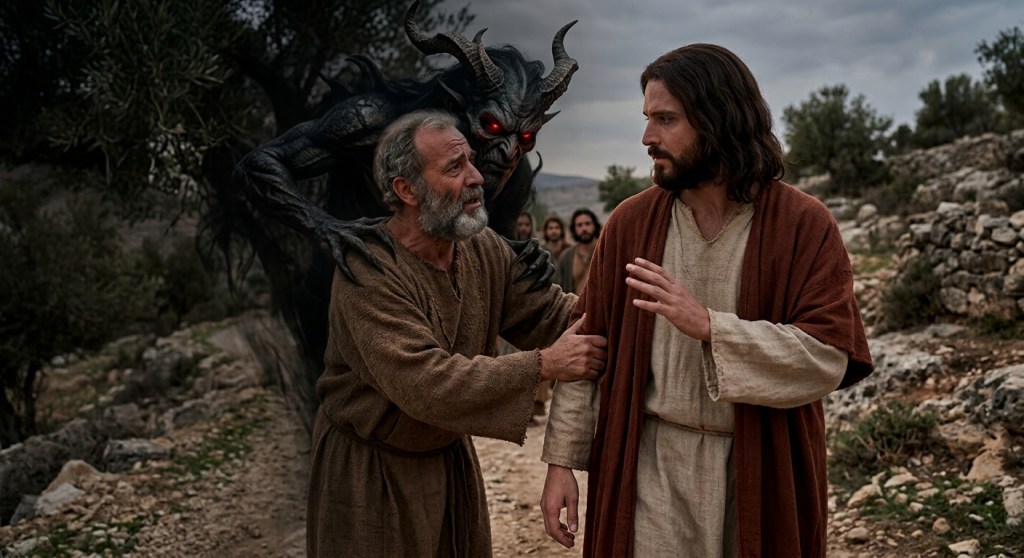
Dear friends, today we celebrate the 22nd Sunday in Ordinary Time. Perhaps the words of Jesus in today’s Gospel, “Get behind me, Satan!”, sound too harsh to our ears. We may even feel sorry for Peter. Only last Sunday, Peter made a beautiful profession of faith, declaring Jesus to be “the Messiah, the Son of the living God.” Today, however, Jesus calls him Satan and tells him to get behind him. What happened?
To understand this strong reaction, we need to go back to Matthew 4:1–11. After Jesus had spent forty days and forty nights in the desert, the devil came to tempt him. The temptation was essentially an attempt to divert Jesus from the path chosen by the Father.
The devil wanted Jesus to choose an easier path: a path without suffering, sacrifice, rejection, and the cross. Jesus, unlike Adam, did not choose the easy way of seeking power or putting himself in the place of God. He rejected the devil’s temptations and remained faithful to his mission, even though that mission would be difficult and painful.
But the devil did not simply give up. Throughout Jesus’ ministry, there were repeated attempts to turn him away from the path of obedience to the Father. In today’s Gospel, when Jesus begins to speak openly about going to Jerusalem, suffering, dying, and rising again, Peter strongly objects. In a sense, the same temptation returns: “Take another way. Avoid the suffering. Do not go to the cross.”
Peter, of course, loves Jesus. He is loyal to him and does not want him to suffer. His words come from human affection and concern. Yet, without realizing it, Peter is trying to discourage Jesus from fulfilling the mission entrusted to him by the Father. That is why Jesus responds so strongly: “Get behind me, Satan! You are a stumbling block to me. For you are thinking not as God does, but as human beings do.”
Jesus is not simply insulting Peter. He is rejecting the temptation behind Peter’s words. Peter is thinking in a merely human way, while Jesus is committed to the will of the Father.
Then Jesus makes the message even clearer: the cross is the way through which his mission will be accomplished. He also tells his disciples that they, too, must follow the same path: “Whoever wishes to come after me must deny himself, take up his cross, and follow me.”
Peter, like many of us, wanted to avoid the cross. We often want the easier way. We want quick success, free things, easy opportunities, instant results, and fast wealth. We do not want to struggle or become tired. Yet experience teaches us that “easy come, easy go.” Many of the most valuable things in life require sacrifice, patience, discipline, and perseverance. Without the cross, there is no Christian discipleship. And without sacrifice, there is no lasting growth.
In our society today, we see many individuals and families becoming discouraged when life becomes difficult. Some enter marriage thinking that it will always be a bed of roses. Others enter priesthood or religious life without fully counting the cost. Some accept positions of leadership or public responsibility without realizing the sacrifices that integrity and commitment demand. Then difficulties come. There may be misunderstandings, disappointments, criticism, financial struggles, rejection, or failure. Some become overwhelmed and even give up.
Life is beautiful, but it is not always easy. As the Swahili proverb says, “Ukiona vyaelea, ujue vimeundwa”—if you see something shining, know that it has been carefully made. The beautiful and valuable things we admire are often the result of hard work, sacrifice, and perseverance. Difficulties become overwhelming when we forget why we chose a particular path or when we forget the demands of that path. We must always remember our original purpose and remain faithful to it.
If we want to live a fulfilling life amid all its challenges, we must accept that there is no path to salvation without the cross. The crosses of life can take many forms: difficulties in marriage and family life, raising children, challenging relationships with colleagues, demanding work, sickness, hunger, poverty, loneliness, and many other struggles.
In the first reading, the prophet Jeremiah gives us a powerful example of this reality. His mission as a prophet had made his life difficult. The word of God that he preached was often challenging and unwelcome. People rejected him, mocked him, and made him an object of scorn. At times, Jeremiah wanted to stop preaching. Yet he could not remain silent because the word of God was like a burning fire in his heart. Despite the rejection and suffering, he remained faithful to the mission God had entrusted to him.
The same can be said of all of us. When we commit ourselves to something good—whether marriage, religious life, priesthood, parenthood, leadership, or public service—we must be ready to carry the cross of perseverance. Along the way, we may experience rejection, mockery, threats, hatred, negative criticism, misunderstanding, betrayal, and scorn. But if we always try to avoid challenges, we may also lose the good things that come through overcoming them.
Another Swahili proverb says, “Mchumia juani hulia kivulini”—the one who works under the hot sun will later eat in the shade. There is a reward for perseverance. There is growth through sacrifice. There is joy after faithful endurance.
Therefore, we must cast behind us everything that discourages us from following the right path. St. Paul, in the second reading, urges us to offer ourselves as a living sacrifice, holy and pleasing to God. He also calls us not to be conformed to the patterns of this world, but to be transformed by the renewal of our minds. In other words, we are called to learn to think as God thinks, rather than simply following the easy ways of the world.
Dear brothers and sisters, I invite you today to reflect on the crosses you must carry in your own life. How do you carry them? Do you carry them with love, sacrifice, patience, and faith? Or do you spend every day complaining about them?
The cross reveals the difference between genuine discipleship and superficial appearances. True life is not simply about looking good on the outside, covered by makeup, fashion, or hypocrisy. What matters is the strength of character and faith that enable us to remain faithful when life becomes difficult.
Let us ask Jesus today to help us think as he thinks. May he give us the courage to remain faithful to our vocation and mission and the strength to carry our crosses, however heavy they may be.
Have a blessed Sunday.
Fr. Lawrence Muthee, SVD

