
Isaiah 55:10–11; Psalm 65; Romans 8:18–23; Matthew 13:1–23
The Seed of Faith
Dear friends, today we celebrate the 15th Sunday in Ordinary Time, as we approach the middle of this liturgical season. Our reflection is centred on the theme: “The Seed of Faith.”
A seed is the beginning of new life. Though small and seemingly insignificant, it contains the potential for abundant growth and fruitfulness. In the same way, the seed of faith planted in our hearts through the Word of God has the power to transform our lives, provided we welcome and nurture it.
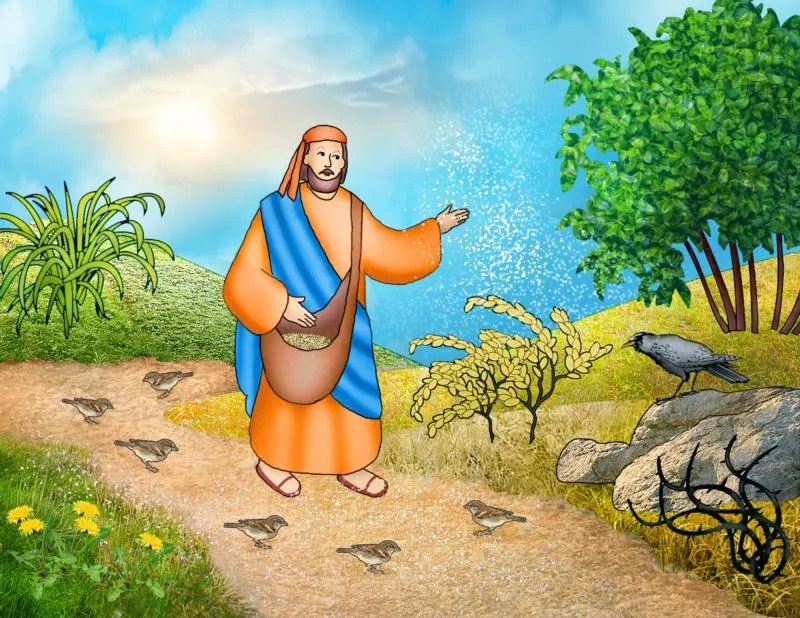
In today’s Gospel, Jesus tells the familiar Parable of the Sower. The same seed is scattered generously, yet it produces different results because it falls on different kinds of soil. The focus, therefore, is not on the quality of the seed but on the condition of the soil. The seed is God’s Word; the soil represents our hearts.
The first seed falls on the hardened path. Because the ground is compacted, the seed cannot penetrate the soil. It remains exposed until the birds come and eat it. Jesus explains that this represents those who hear the Word but do not allow it to enter their hearts. The evil one quickly takes away what was sown. A hardened heart leaves no room for God’s grace. Like an untilled field, it is unprepared to receive the seed.
The second seed falls on rocky ground. It sprouts quickly but soon withers because its roots cannot grow deep enough to find moisture and nourishment. This reminds us that faith requires a solid foundation. Today, many people desire the blessings of Christianity but are unwilling to invest the time and commitment needed for genuine formation. Some seek Baptism without serious catechesis; others wish to celebrate Christian marriage without proper preparation. As a result, we often have many baptized Christians but comparatively few committed disciples of Christ.
The third seed falls among thorns. It grows, but the thorns gradually choke it. This describes many believers whose faith is overwhelmed by worldly concerns. Following Christ requires a new way of living. During our faith formation, we are called to leave behind attitudes and practices that contradict the Gospel. If this conversion is incomplete, the “thorns” of life—such as excessive attachment to wealth, social pressure, unhealthy traditions, business interests, the pursuit of comfort, or fear of persecution—can suffocate our faith and prevent it from bearing fruit.
Finally, the seed that falls on good soil grows and produces an abundant harvest—some a hundredfold, some sixty, and some thirty. The important point is not the quantity of the harvest but the fact that every healthy plant bears fruit according to its capacity. God does not expect all of us to produce the same results. He asks each of us to be faithful with the gifts and talents we have received. When every Christian bears fruit according to God’s grace, families, communities, and society are transformed.
The first reading from the prophet Isaiah reinforces this message. God compares His Word to the rain and snow that come down from heaven. They never return without watering the earth, making it fruitful and providing food for all. In the same way, God’s Word always accomplishes His purpose. Even if some reject it, others will receive it with open hearts, and it will bear abundant fruit in their lives.
Sometimes people imagine that by withdrawing from the Church or abandoning their faith they can hinder the mission of the Gospel. The truth is quite the opposite. God’s work continues because His Word never fails. It is we who suffer when we distance ourselves from Him. We deprive ourselves of the peace, hope, and purpose that come from living according to the Gospel.
To use a modern digital analogy, Baptism is like being connected to God’s Kingdom. Through it, we receive access to the grace and life that Christ offers. However, if we fail to live our faith, we become like devices that are no longer updated—still existing but gradually losing their ability to function as they were designed. The problem is not with the source of life but with our willingness to remain connected to it.
In his Letter to the Romans, St. Paul reminds us that the sufferings of this present life are insignificant compared with the glory that God has prepared for those who remain faithful. Even creation itself longs for renewal and redemption. This encourages us to persevere in faith despite difficulties, trusting that God’s harvest will come in His own time.
Dear friends, let us ask ourselves today: What kind of soil am I? Is my heart hardened, shallow, distracted, or open and receptive to God’s Word? The answer to this question determines whether the seed of faith will flourish in our lives.
Our task is to cultivate the soil of our hearts through prayer, the sacraments, reading Scripture, acts of charity, and perseverance in Christian living. There are no shortcuts to spiritual maturity. Chasing quick-fix miracles while neglecting daily conversion is like seeking instant wealth without honest labour—it promises much but leaves us empty. True growth comes from patiently allowing God’s Word to take root and transform us from within.
Many people stop practising their faith because the world tells them that religion is outdated or a waste of time. But we should honestly ask ourselves: Are our lives truly better when we stop praying, neglect the Eucharist, abandon the Christian community, and ignore God’s Word? Experience shows that lasting peace and fulfilment are found not in abandoning faith but in living it more deeply.
May the Lord prepare our hearts to be fertile soil, so that His Word may grow within us and produce a rich harvest of faith, hope, love, and good works.
Have a blessed and fruitful Sunday.
Fr. Lawrence Muthee, SVD
(See also: www.svdkentan.com)
 SVD JAMBO KENTAN