
Isaiah 5:1–7; Psalm 80 (79); Philippians 4:6–9; Matthew 21:33–43
Christian Responsibility: What Is Expected of a Christian?
Dear friends, today is the 27th Sunday in Ordinary Time. The readings invite us to reflect on a simple but important question: What does God expect from us as Christians?
Christianity is not merely a name, an ideology, or a religious identity. It is a way of life. It is the decision to follow and imitate Jesus Christ. Whatever God wants us to know about Himself and about how we should live has been revealed to us in Jesus Christ. Therefore, to be a Christian is to know Christ, listen to Him, and gradually become like Him.
But we cannot imitate someone we do not know. That is why Christians must continually grow in their knowledge of Christ through prayer, the Sacraments, and especially the Word of God. The Scriptures help us to know who Jesus is and what He expects from His followers.
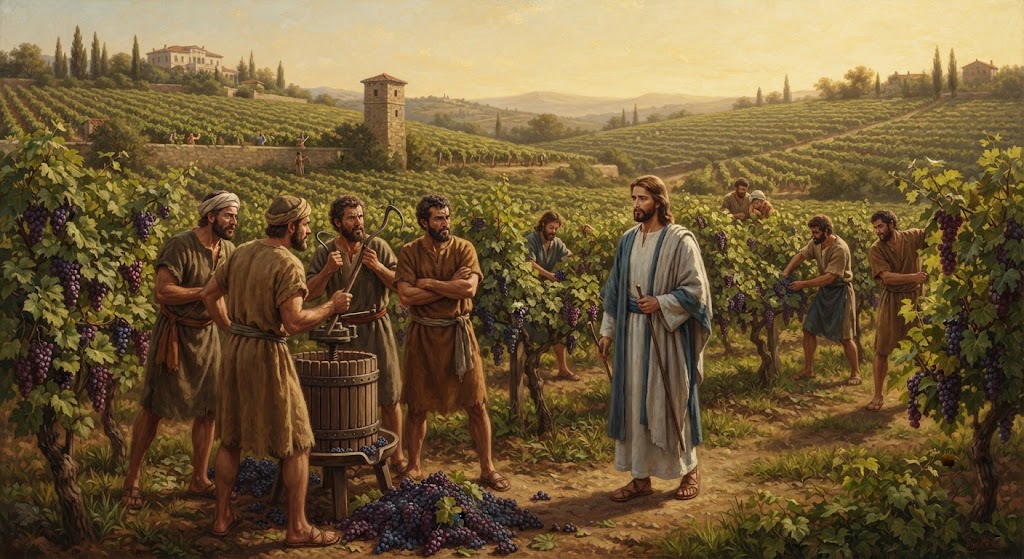
The first reading gives us the beautiful image of a vineyard. Isaiah describes God as the owner of the vineyard. He carefully prepares the vineyard, removes the stones, plants good vines, protects them with a fence, and expects a good harvest. But instead of good grapes, the vineyard produces wild grapes.
The vineyard represents God’s people. God has given them everything necessary to produce good fruit, but they have responded with injustice and unfaithfulness. The same question can be asked of us today: What kind of fruit is my life producing?
At Baptism, God gives us new life. He cleanses us from sin, makes us His children, incorporates us into the Church, and surrounds us with His grace. He gives us the Word, the Sacraments, the community of faith, and people who help us along the way. And what does He expect in return? He expects good fruit: love, justice, honesty, forgiveness, compassion, peace, and service.
Unfortunately, sometimes the opposite happens. People who call themselves Christians can be involved in corruption, hatred, injustice, violence, exploitation, and dishonesty. Some Christians entrusted with public responsibility misuse public resources that are meant to serve the poor. We should never forget that God sees the fruit of our lives.
Think about a farmer protecting his field. From the moment seeds are planted until harvest, the farmer works hard to protect the crops. Those who live among pastoralists know how quickly animals can enter a farm and destroy months of work.
God also protects us. But we should never take His protection for granted. It is better to face difficulties with God than to have everything while living without Him. It is better to be poor with God than rich without Him.
In today’s Gospel, Jesus tells the parable of the wicked tenants. The owner of the vineyard entrusts it to tenants and expects them to produce fruit. But when the servants come to collect the harvest, the tenants beat some, kill others, and finally kill the owner’s son.
Jesus is speaking particularly about the religious leaders who had been entrusted with God’s people. They had received responsibility, but instead of serving the people, they used their position for themselves. The message is clear: authority is a responsibility before God.
This applies not only to religious leaders but to all of us. Parents have responsibility for their children. Teachers have responsibility for their students. Civil servants have responsibility toward citizens. Religious leaders have responsibility toward the faithful. Every Christian has a responsibility to those around him or her. We are all workers in God’s vineyard.
This is also an important lesson for missionaries. A missionary is sent to bring Christ to people and to help them encounter the Gospel. The missionary must become close to the people, understand their culture, walk with them, and, as Pope Francis reminds us, “smell like the sheep.” But closeness should never mean losing the Gospel. The missionary is not sent simply to make people comfortable. The missionary is sent to help people become disciples of Jesus Christ.
The history of evangelization in Africa contains many beautiful examples of missionaries who sacrificed themselves completely for the Gospel. Some gave their very lives for the people they served. We are beneficiaries of their sacrifice. At the same time, history teaches us that evangelization must not create permanent dependence. Christianity cannot become simply a system through which people receive material assistance. The ultimate goal of evangelization is to help people develop a mature, personal, and responsible relationship with Christ.
My dear friends, Christianity is not a hiding place from responsibility. Following Christ requires commitment, discipline, prayer, sacrifice, and hard work. A Christian is called to be salt and light in the world.
We should also be cautious about religious messages that promise wealth, success, and miracles without effort or responsibility. The Christian Gospel does not teach us that everything will be given to us without work. From the beginning, God gave humanity the responsibility to cultivate and care for creation. Grace does not remove responsibility. Grace enables us to fulfil our responsibility.
So, my dear friends, let us ask ourselves today: What kind of fruit am I producing? Is my life producing love or hatred? Justice or injustice? Peace or conflict? Honesty or corruption? Service or selfishness? Am I becoming more like Christ, or am I simply carrying the name “Christian”? The owner of the vineyard expects a harvest.
Let us therefore take good care of the vineyard God has entrusted to us—our families, our communities, our Church, our work, and our own lives. May our lives produce fruits worthy of the faith we profess.
Have a blessed Sunday.
Fr. Lawrence Muthee, SVD

