

2 Kings 4:8–11, 13–16; Psalm 89(88); Romans 6:3–4, 8–11; Matthew 10:37–42
Generosity as a Prayer
Dear friends, today we celebrate the 13th Sunday in Ordinary Time. The question for our reflection is: How do we pray?
Many times, our prayers seem to go unanswered either because we do not pray well or because our own actions contradict what we ask of God. If we desire something from God, words alone are not enough. We must live in a way that demonstrates the sincerity of our requests. In fact, there are moments when we do not even need to speak. Our acts of generosity can become the most sincere prayers we offer to God.
A simple example is that of a student who desires to pass examinations. It would be futile for such a student to spend every night in prayer or seek blessings from pastors and bishops shortly before the examinations without having studied diligently. Prayer does not replace personal responsibility; rather, it complements it.
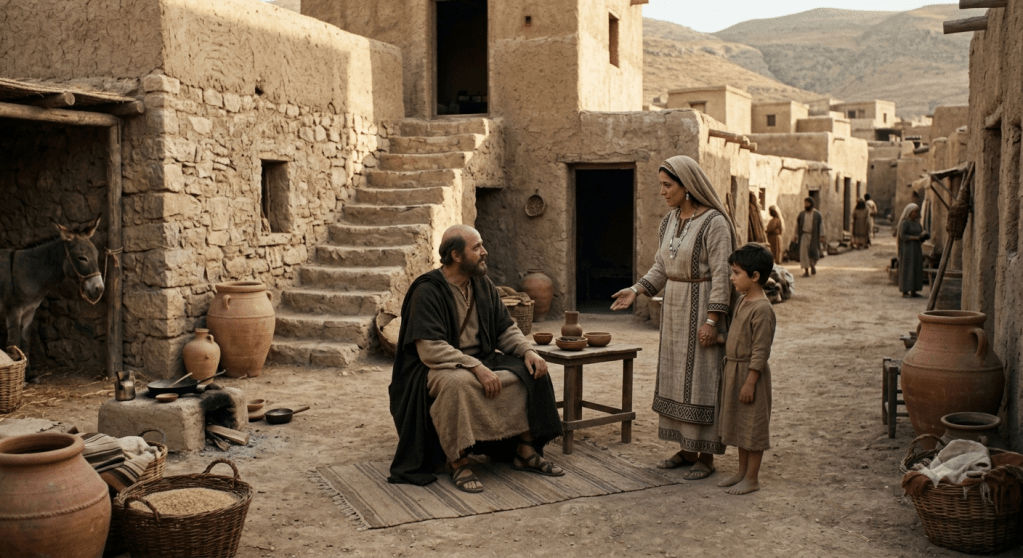
The first reading from the Second Book of Kings illustrates this truth beautifully. The woman of Shunem received the blessing of a child, not because she pleaded with God, day and night, but because she generously welcomed the prophet Elisha into her home. As Elisha regularly passed by on his prophetic journeys, she repeatedly invited him to eat with her family. Eventually, with her husband’s consent, she prepared a permanent room where he could rest whenever he travelled through the area.
One day, while resting in that room, Elisha wondered why the woman had shown him such extraordinary generosity. After making inquiries, his servant Gehazi informed him that she had no child and that her husband was advanced in age. Elisha then called the woman and announced that, within a year, she would embrace a son. Her generosity became the channel through which God’s blessing reached her.
In today’s Gospel, Jesus teaches that every genuine act of generosity receives its reward. However, it is our intention that determines whether an action is truly generous. If we welcome a prophet because he is a prophet of God, we shall receive a prophet’s reward, just as the woman of Shunem did. If we welcome others because they are children of God, we shall receive the reward promised to God’s children.
This challenges us to examine our own motives. Do we welcome people into our homes and lives because they are our brothers and sisters in God, or because we expect something in return? Is our generosity directed mainly towards the rich and influential, or do we also extend it to the poor, the forgotten, and those who have nothing to offer us?
Long and emotional prayers are of little value if they are not accompanied by generosity towards others. Unfortunately, we live in a generation where almost everything seems to carry a price tag. Some places of worship have become marketplaces where miracles are bought and sold. Miracles have become commodities, and people are led to believe that financial offerings can compensate for a lack of charity, justice, and compassion. Even educated people often flock to self-proclaimed prophets in search of quick solutions to problems that have accumulated over many years. But can a single emotional prayer truly resolve issues that have developed over decades without any personal conversion or effort?
Much of what we seek from God can be found through genuine generosity towards others. Generosity takes many forms. It includes sharing our time, offering material assistance, using our physical strength to help others, speaking encouraging words, serving clients with dignity and honesty in our workplaces, listening patiently, forgiving offences, and showing kindness in everyday life.
God created us to live in community and to depend on one another. He did not make us self-sufficient. Instead, He distributed different gifts among His people and placed within each of us a need for others. Our generosity enables us to experience the fullness of life. Reciprocity strengthens communities by ensuring that everyone’s gifts contribute to meeting everyone’s needs.
In the second reading, St. Paul reminds us that through Baptism we have died and risen with Christ. We have become new people. Therefore, selfishness, unhealthy competition, greed, contempt, and every attitude that distances us from our neighbours must give way to genuine generosity and sincere concern for others.
Jesus Himself perfectly embodied this generosity. He did not simply perform miracles; He transformed lives. He restored dignity, inspired conversion, and empowered people to become better versions of themselves. As His disciples, we too are called to practise this same generous love. When we do so, we can trust that God will reward us according to His promises.
Dear friends, we cannot achieve prosperity by attempting to bribe God through self-proclaimed prophets. Rather, God’s blessings often come to us through our smallest acts of love and generosity towards those in need. Today, I invite each one of us to examine our faith honestly and ask whether it reflects the generosity that attracts God’s favour.
May we become people whose lives are prayers expressed through generous love.
Have a blessed Sunday.
Fr. Lawrence Muthee, SVD
 SVD JAMBO KENTAN