
1 Samuel 16:1, 6–7, 10–13; Psalm 22(23); Ephesians 5:8–14; John 9:1–41
The Journey of Faith
Dear friends, today we celebrate the Fourth Sunday of Lent. We are now moving steadily toward the Holy Week, with only two weeks remaining before we enter the sacred days of the Passion of the Lord. Today’s reflection is a little bit longer than usual because this is my favourite passage in the Gospel of John. Please bear with me. The liturgy of these Sundays presents powerful encounters with Jesus in the Gospel of John—encounters that reveal how faith grows gradually in the human heart.
Last Sunday, we listened to the story of the Samaritan woman in John chapter four. Through a long and honest conversation with Jesus, her understanding deepened step by step until she came to believe in him. Today’s Gospel presents another journey of faith, this time through the story of the man born blind in John chapter nine. His faith does not appear all at once. It unfolds slowly, through questioning, conflict, and courage. In many ways, his experience mirrors our own path toward mature faith.
The first reading offers an important starting point for this reflection. When God sends the prophet Samuel to choose a king among the sons of Jesse, Samuel is impressed by outward appearance. Yet God corrects him with a striking reminder: “Human beings look at appearances, but the Lord looks at the heart.” Human judgment is often superficial. We are easily impressed by prestige, influence, and external success. As a result, societies frequently elevate the wrong people to positions of leadership.
St. Paul develops this same theme in the second reading. Those who live in the light of Christ are recognized not by words or public image but by the fruits of their lives—goodness, righteousness, and truth. Authentic faith becomes visible through concrete acts of justice, compassion, and integrity. True discipleship is not demonstrated by loud declarations but by consistent moral conduct. Jesus himself said, “Not everyone who says to Me, ‘Lord, Lord,’ will enter the kingdom of heaven, but the one who does the will of My Father who is in heaven” (Matthew 7:21).
The Gospel then introduces the central issue: the mystery of suffering and misfortune and salvation in Christ. In the Jewish tradition of the time, people believed that physical disabilities were direct punishments for sin, either personal sin or the sins of one’s ancestors. Even today, similar beliefs persist in many communities, including among baptized Christians who attribute suffering to inherited curses, witchcraft, demons, or hidden wrongdoing.
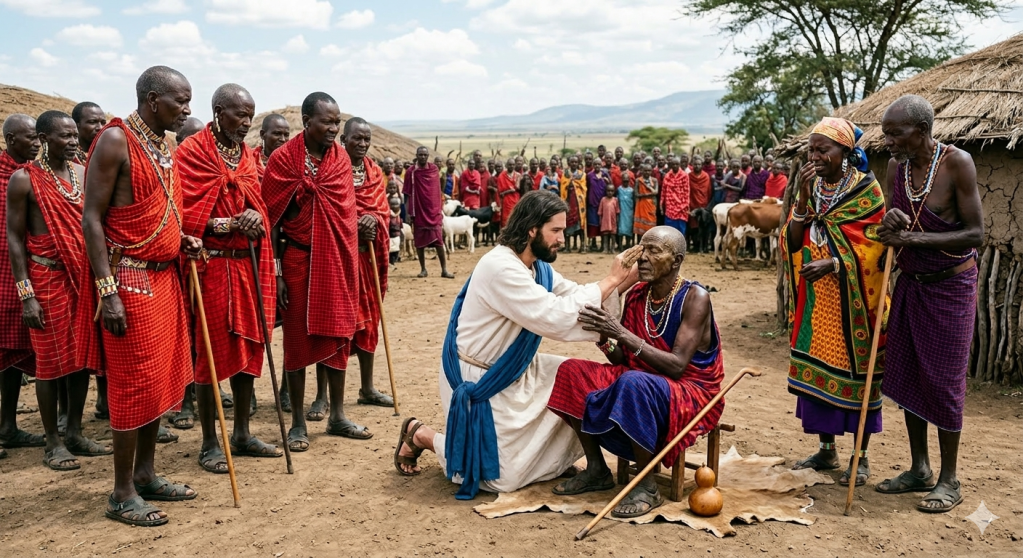
Jesus rejects this simplistic explanation. When his disciples ask whether the blindness of the man was caused by his own sin or that of his parents, Jesus responds clearly: neither. Instead, the situation will become an opportunity for the works of God to be revealed. What human beings perceive as tragedy or misfortune can become the very place where God’s grace is manifested.
The healing itself, however, immediately triggers controversy. Jesus heals the man on the Sabbath. According to the strict interpretation of the law at that time, the Sabbath prohibited any form of work, including healing, walking long distances, or even cooking food. People prepared everything the previous day to avoid violating the sacred rest. “The Sabbath was made for man, and not man for the Sabbath” Mark 2:27.
Thus, the miracle becomes overshadowed by legalism. Instead of celebrating the restoration of a man’s sight, the religious authorities become preoccupied with the violation of regulations. The healing becomes a threat to their authority and interpretation of the law.
This reaction reveals a troubling reality that continues to appear in many societies: goodness itself can be condemned when it threatens established interests. The neighbors who once knew the blind man do not celebrate with him. Instead, they become suspicious. Some even deny that he is the same person. Envy and cynicism distort their judgment.
Such attitudes are not unfamiliar today. When someone performs acts of generosity, sacrifice, or integrity, others often search for hidden motives. Rather than rejoice in goodness, they question it. Suspicion becomes easier than gratitude.
The tension intensifies when the Pharisees interrogate the healed man. Their objective is not to discover the truth but to force him to discredit Jesus. Yet something remarkable happens during this confrontation: the man’s faith grows step by step.
At first, he simply describes what happened. Later, when asked who Jesus is, he says, “He is a prophet.” His understanding is expanding. Through conflict and questioning, his spiritual vision is gradually becoming clearer.
Meanwhile, those who claim to possess religious authority reveal a deeper blindness. Unable to deny the miracle, they attempt to undermine it by questioning whether the man had truly been born blind. They summon his parents for verification.
The parents respond cautiously. Out of fear of being expelled from the synagogue, they avoid taking a clear position. They confirm only what cannot be denied: that he is their son and that he was born blind. Beyond that, they distance themselves from the matter. Their reaction illustrates how fear can silence truth. Many people know what is right, but they hesitate to defend it when personal security is at risk.
The authorities then interrogate the man once more. By now, his confidence has grown. He refuses to participate in their attempt to condemn the one who healed him. His testimony becomes both simple and powerful: “I do not know whether he is a sinner. One thing I do know: I was blind, and now I see.”
This statement captures the essence of authentic faith. It is grounded not in abstract arguments but in lived experience. The man cannot explain everything about Jesus, but he cannot deny the transformation that has taken place in his life. His courage provokes hostility. The authorities insult him and eventually expel him from the synagogue. In other words, he pays a social price for defending the truth. Are you ready to pay the price of defending the truth?
Yet this rejection leads to the most important moment of the story. Jesus seeks him out once again and asks a decisive question: “Do you believe in the Son of Man?” When the man recognizes who Jesus truly is, he responds with the full profession of faith: “Lord, I believe.”
The journey is complete. What began as physical healing has culminated in spiritual sight.
This Gospel, therefore, presents three profound lessons. First, faith is often a gradual process. Like the blind man, believers move step by step toward deeper understanding. Growth in faith usually occurs through questioning, struggle, and experience.
Second, the story exposes a disturbing social pattern: righteousness is often condemned when it challenges selfish interests. Those who benefit from power, privilege, or corruption may attempt to discredit acts of truth and goodness.
Third, the Gospel calls believers to courage and perseverance. The blind man refuses to deny the truth even when confronted by hostility and exclusion. His steadfastness becomes a model for all who wish to remain faithful to what is right.
Dear friends, the journey of faith is ultimately a journey toward clearer vision. As we grow spiritually, we begin to see reality more truthfully. We learn to recognize the difference between genuine righteousness and the illusions created by pride, jealousy, and fear.
Let us therefore ask for the grace to see with the eyes of faith. May we not be blinded by prejudice, rigid traditions, or social pressures that silence truth. Instead, may we remain courageous and steadfast in doing what is good, even when goodness is misunderstood or opposed.
The question that remains for each of us today is simple but demanding: Do I truly see?
Have a fruitful Lent.
Fr. Lawrence Muthee, SVD
(See also www.svdkentan.com for other content)
 SVD JAMBO KENTAN