
Exodus 17:3–7; Psalm 94(95); Romans 5:1–2, 5–8; John 4:5–42
“Now We Know that He is Truly the Savior of the World.”
Dear friends, Today we celebrate the Third Sunday of Lent. Lent is a very special period for all believers, but more so for those preparing for baptism at the Easter Vigil – The catechumens. It is a time when they are invited to examine their hearts, deepen their conversion, and strengthen their desire to know Christ.
The catechumenate is the final stage in a long process of initiation into the Christian faith. Christianity is not merely an idea that one accepts intellectually; it is a way of life. Like any tradition, it has values, moral expectations, spiritual disciplines, and a particular understanding of God and human life. Today’s readings describe precisely this process of coming to know God and learning to live according to his will revealed in Jesus Christ.
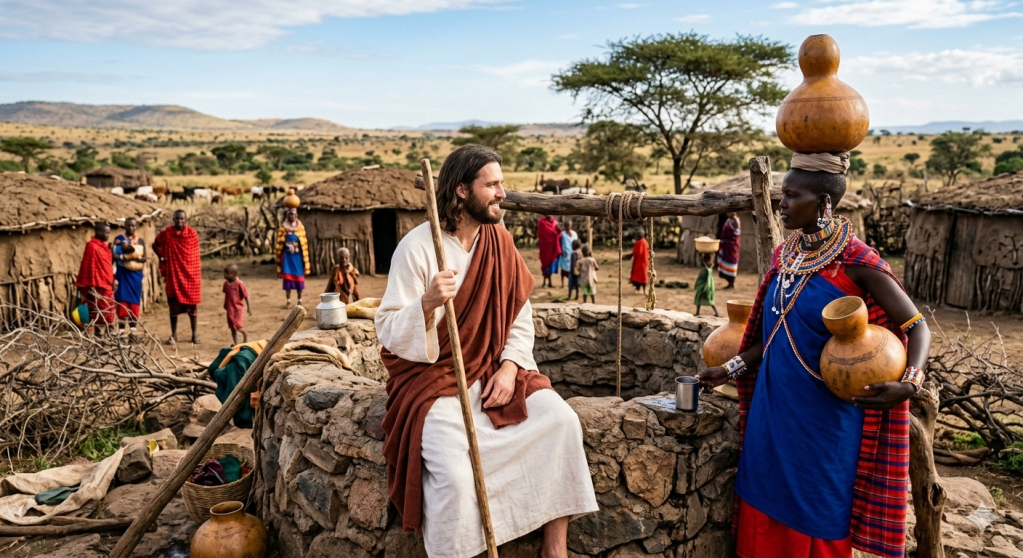
The Gospel presents the famous encounter between Jesus and the Samaritan woman at the well (John 4:5–42). This encounter can be read as a model of the catechumenal journey. The woman approaches the well simply to draw water for daily use. She does not expect a life-changing encounter. Yet in this ordinary moment, she meets Christ.
The first stage is the encounter. Faith always begins with an encounter with Christ. Christianity is not primarily adherence to a set of doctrines but a relationship with a person. As Pope Benedict XVI once observed, being Christian begins with an encounter with Jesus Christ. The Samaritan woman did not seek Jesus intentionally, yet Christ was already waiting for her. Jesus meets us in ordinary persons, places, and circumstances. How did you encounter Jesus?
The second stage is the recognition of reality. The conversation begins with the historical tension between Jews and Samaritans. The woman immediately raises the social and religious barriers separating them. “How is it that you, a Jew, ask a drink of me, a woman of Samaria?” Human beings often approach God carrying wounds, prejudices, divisions, and misconceptions. True knowledge of God requires honesty about our real condition. What has been barring you from encountering the love of God?
This theme is already present in the first reading from Exodus. The Israelites in the desert complain about thirst and begin to doubt God’s presence among them: “Is the Lord among us or not?” (Ex 17:7). Their questioning reveals the spiritual struggle of a people who have not yet learned to trust God fully. The place is named Massah and Meribah, meaning “testing” and “quarreling,” because the people tested the Lord. The journey of faith always passes through such moments of doubt and struggle. Are you in a moment of doubt? Did you stop practicing your faith?
The responsorial psalm takes up this theme and transforms it into a call to conversion: “If today you hear his voice, harden not your hearts.” To know God requires openness of heart. A hardened heart prevents us from recognizing God’s presence and guidance.
Returning to the Gospel, Jesus gradually elevates the conversation from the physical to the spiritual. He speaks about living water—the divine life that satisfies the deepest thirst of the human heart. At first, the woman misunderstands him. She interprets his words in purely practical terms, thinking about avoiding the daily labor of drawing water. This misunderstanding is typical of the early stages of faith. God often speaks in ways that initially exceed our understanding. Many people today still think that becoming a Christian means the end of human struggles.
The next stage is revelation and conversion. Jesus asks the woman to call her husband. When she responds that she has none, Jesus reveals the truth about her life: she has had five husbands, and the man she lives with now is not her husband. This moment exposes her moral reality. Encounter with Christ always leads to self-knowledge. To know God truly, one must also confront the truth about oneself. Conversion involves acknowledging sin and allowing Christ to heal what is broken.
At this point the woman begins to perceive that Jesus is more than an ordinary traveler. She recognizes him first as a prophet and later raises the question about the Messiah. Jesus then makes a profound revelation: “I who speak to you am he.” The woman’s understanding moves progressively from curiosity to recognition.
Another significant moment occurs when the woman leaves her water jar and runs back to the town. The jar symbolizes the old priorities of her life. Having encountered Christ, she abandons what once occupied her attention and becomes a witness. Authentic faith naturally leads to mission.
Her testimony leads the villagers to Jesus. They listen to him, remain with him for two days, and finally profess their own faith: “Now we believe, not because of what you told us, but because we have heard him ourselves, and we know that he is truly the Savior of the world.” This statement marks the culmination of the catechumenal journey. Faith that began through the testimony of another becomes personal conviction through direct encounter with Christ.
The second reading from Romans illuminates this process from a theological perspective. While we were still sinners, Christ died for us. The initiative always comes from God. Conversion is our response to the love that God has already shown us.
Taken together, the readings describe a path toward knowing God and living according to his will. This path includes encounter, honesty about our condition, instruction in the truth, conversion of life, and finally personal faith that leads to witness. We too must ask ourselves: Have we truly encountered Christ? Do we listen to his voice, or do we harden our hearts? Do we allow his word to reveal the truth about our lives? Have we come to a personal conviction that Jesus is truly the Savior of the world?
Dear friends, Lent invites us to return to the well where Christ waits for us. Only he can give the living water that satisfies the deepest thirst of the human heart. May this season help us to grow in the knowledge of God and to live faithfully according to the will he has revealed to us in Jesus Christ.
Fr. Lawrence Muthee, SVD
 SVD JAMBO KENTAN