

Have you experienced frustration in getting services in public offices? This could be due to unexplained delays, slow or jammed systems, absent officials, or missing documents, among other factors. In some offices, people wait for long hours, and even days, just to submit their application documents. After they have submitted, they wait for more days or months before they get a response. Simple processes that require only a signature become complicated, costly, and time-consuming. These processes could take only a few minutes or hours if all the relevant officials were to be present and do their work. It is like a norm that public services must be delayed for them to appear important. Take, for example, getting a land certificate. Even if you have all the relevant information and documents, it may take months for you to get it.
A few years ago, I met an old man at the National Social Security Fund (NSSF) offices, and as we were going up the staircases to the fourth floor (because the lifts were not working), we began conversing. The old man told me that the lift has been broken for the last nine months. When I inquired to know how he knew that, he said that he had been visiting the office to claim his social fund after retirement for three years with no avail. That shocked me. He added that every time he goes, there is something that is missing or not working. He told me that he knew someone who died before he got his social funds released. The question is what really causes delays in public offices?
The quick answer to the question above is CORRUPTION. Corruption has many forms. The most common one is when an official asks for a bribe to expedite the process. However, other forms of corruption may not be very conspicuous and may not even pass as corruption. One of these is ‘per diem allowances, that is, allowances given to employees when they work outside their duty offices to cover travel or work expenses. In many cases that I have seen, the rates are way more than the actual travel expenses. Mind you, sometimes, in many cases, transport to the outstation and meals are provided on top of per diem allowances. Here is where the problem begins.
In many government and non-governmental organizations, monthly per diem allowances may even exceed the basic salary of a worker. In the private sector, this is very rare for obvious reasons. The proprietor makes sure that he gets value for the money in every worker. In fact, many people who have worked in the public sector find it very difficult to work in the private sector. Because of greed for per diem allowances, many public officials spend a lot of time in meetings, benchmarking, site visiting, and board meetings in luxurious venues. Back at their duty stations, the waiting queues continue to grow longer every day. To make matters worse, there is no notice whether the duty officers are present or not. People wait until the offices are closed.
Another form of corruption is absenteeism. This is whereby the officials fail to report on duty or only report for a while and then disappear from the office. This is rampant in sectors such as health, engineering, land survey, etc., because many officials have private offices where they spend most of their time. Some senior officers leave their offices open and their jackets hanging on the chairs. The people waiting to be served keep thinking that the officer is just around. At the end of the month, these officers receive their due salaries while making money from their own businesses. Many state departments and NGOs lose huge amounts of money that could have been used in projects to pay per diem allowances. Recently, the confusion with USAID was all over the news. It was alleged that the biggest chunk of the fund goes to catering for officials’ travel allowances and upkeep abroad, and only very little reaches the intended projects.
The other form of corruption is false entitlement. This is where the employee believes they deserve a right, reward, or benefit they he or she is not entitled to according to the law, terms of contract, fairness, or agreed-upon rules. This could be caused by many issues, including long time in service, increased personal or family financial strains, further studies or training, relationship with the employer or manager, etc. False entitlement can negatively impact teamwork and work relationships. Those who feel short-changed may become unproductive, toxic, or even quit their positions.
In a book fair in one city in Europe, I met an employee of an organization working in one of the biggest slums in Africa. During our conversation, I learnt that his organization had been operating in that slum for 30 years. Upon asking whether he thought that they had made any difference in those years, he frankly told me that, unfortunately, making a difference was not the priority of many organizations like his. The priority was rather to raise funds for endless projects to sustain the jobs of the officials. This is how bad the situation can get.
According to the FAO Statistical Yearbook 2024, the world produces enough food to feed every person. The problem is distribution, inequality, and waste. According to WFP (wfp.org), 18% of the world’s food is wasted while almost a billion people suffer from inadequate nutrition (SOFI report who.int). Many governments of countries in the global south cannot secure food for all their citizens because of mismanagement of resources caused by rampant corruption.
There is a general lack of patriotism among government and NGOs officials. Excess desire for self-preservation, nepotism, and laziness is rampant in all sectors. The private sector is excessively capitalistic. There are no checks and balances in public institutions. When everyone has dirty hands, there can never be supervision. Although not lacking challenges of their own, some mainstream religions, like the Catholic Church, have managed to transform communities because of discipline, checks and balances, and supervision. Nevertheless, for a society to enjoy reliable and sustainable development, all the sectors need to work together.
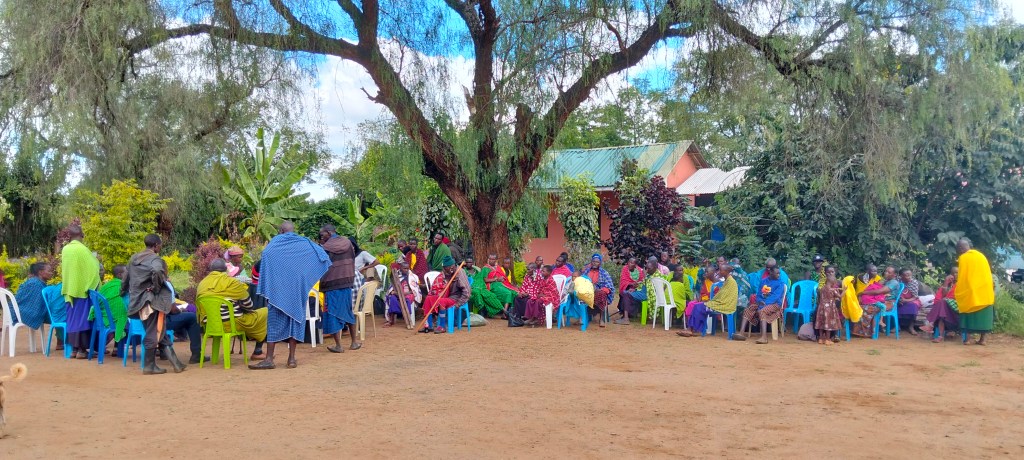
The next form of corruption and the most common one is bribery. Giving and taking bribes is one of the leading causes of the violation of basic human rights. In my mission, we have many cases of child abuse in the form of child marriages. The major perpetrators are the parents, especially the fathers, who exchange them for cows. Some are married off to men the age of their grandfathers. As a parish mission, we have created a haven where girls in this situation can run to. However, we have no capacity to rescue all the girls by ourselves without collaboration with the local authorities. In many attempts we have made to rescue such girls, the weakest link has always been with the local authorities. The perpetrators pay hefty bribes, and the girls end up getting married against their will. The levels of impunity in our society are incredible. Thus, the lowly continue to suffer the consequences.
This kind of mess in our society has its roots right from the families and communities we are brought up in. There is a grave need for a collective, multisectoral conversation about corruption and revisiting how the ethical and moral fabric of our society is to be mended. Are you a victim or a perpetrator of corruption in your sector? What do you think is the way out of this?
 SVD JAMBO KENTAN