
2 Maccabees 12:42-45, Psalm 62(63), Philippians 3:20-21, Luke 7:11-17
Life and Death
Dear Friends, today is the 31st Sunday of Ordinary Time. However, the commemoration of All the Faithful Departed (All Souls’), which falls on this day, takes precedence. Here is what the General Norms for the Liturgical Year and the Calendar (1969) No. 13, says:
“The Commemoration of All the Faithful Departed is celebrated on 2 November. If this date falls on a Sunday, it takes the place of the Sunday in Ordinary Time.”
If life is the greatest mystery on earth, death is the greatest sign of contraction. This is because it seems to destroy life. Jesus, talking about the necessity of his death, told his disciples, “Truly, truly I tell you, unless the grain of wheat falls to the ground and dies, it remains only a single grain. But if it dies, it produces many seeds” (Jn 12:24). The only way to eternity is through the door of death. This means that for the believer, death is not the destruction of life but the birth of a new one.
Death is also the most certain event in human life, and everyone knows it. We may pretend to forget it; we may even deliberately ignore it; or we may fight vehemently against it, but it is eventually inescapable. Even when the doctors tell us that there is no more remedy, we continue to spend all we have in our attempts to save or prolong life. When we attend funerals, most of the time we concentrate on mourning the dead rather than reflecting on our own inevitable death. Funerals can also be wonderful opportunities to think about our own inevitable death. Have you ever thought about it?
For those who do not believe in God or life after death, life itself can be very devastating. Some people even lose the meaning of life when their loved ones die. However, for those who believe and hope for life after death, death is only a transformation of life.
But how did death come about? From the book of Genesis, we read that God created human beings in His own image and likeness and breathed His own spirit into them. However, deceived by the evil one, man and woman corrupted this image and likeness. They doubted the identity given by God and sought something they did not know about. Even today, people abandon the good things they already have and spend their entire lives chasing better things they do not know about. Are you one of them?
Though our bodies are mortal, our spirits are immortal because they came from God. This is why it is tenable to believe in two types of death. The first one is inevitable for all living creatures, but the second, humans can make a choice. Jesus also alluded to this fact when He told His disciples, “But I will tell you whom to fear: Fear Him who, after He has killed the body, has authority to throw you into hell” (Lk 12:5). Hell is the failure of the spirit to contemplate the glory of God from whom it came. It is the eternal alienation from God. Jesus came to save us not from the death and decay of our mortal bodies but from eternal death (hell) brought about by sin. He Himself died and rose again to give us the everlasting possibility of our own resurrection. The only difficulty is that though salvation has been freely given to all, not everyone seems to accept or choose it. In my opinion, death is not the most tragic thing on earth, but the freedom to choose is.
Life after death is contemplated in many world cultures, including that of the Israelites, as we read today in the first reading. This belief determined how people lived and behaved. In the second reading, St. Paul tells us that Christ will transform our bodies and make them like His if we remain faithful to the end. Jesus demonstrated his power over death by raising the dead during his mission in the world. He finally defeated death by rising from the dead himself. This is enough evidence for you to believe in the resurrection of the dead and live accordingly.
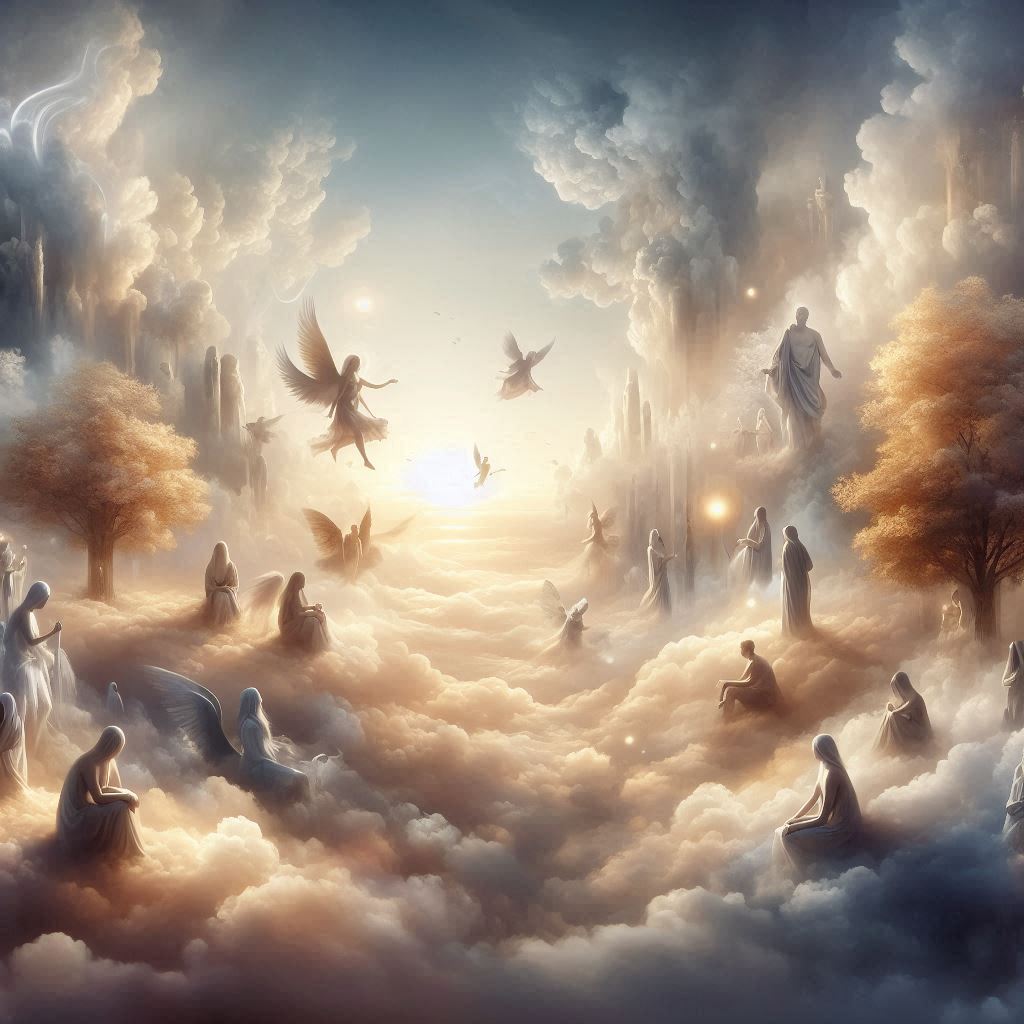
Yesterday, we celebrated the feast of All Saints in heaven. Those who chose the Kingdom of God while in this world. Today, we pray for the souls of the faithful who may still be in purgatory (a place of cleansing for those who died with debts to pay). These two feasts celebrate what we call the communion of the Chuch. The pilgrim Church (all the faithful in the world), the suffering Church (souls in purgatory), and the triumphant Church (the saints in heaven).
As long as we live on Earth, we have all the possibilities. We can change from good to bad or bad to good as we wish. However, the moment we die, we remain in the immediate state. Those who completely deny the existence of God and live in a manner contrary to the Divine Law will rise to eternal condemnation. Those who do not deny the existence of God and the salvation in Christ and die in sin will rise to purgatory to be cleansed before they can enter heaven, and those who die in a state of grace will go to heaven. Our prayers cannot change the status of the condemned, but can help those in purgatory (Macc 12:44). If you died today, where do you think you would go?
Dear friends, faith and hope in God and His salvation given to us through Christ Jesus are supposed to impel us to live righteously, even in a world where evil is glorified. The thought of the inevitability of death must not dull our spirits but animate us in virtue and righteousness. As we pray for our faithful departed, let us also take a moment to think not only about our present life but also not forget about our death.
Have a blessed day.
Fr. Lawrence Muthee, SVD
 SVD JAMBO KENTAN