

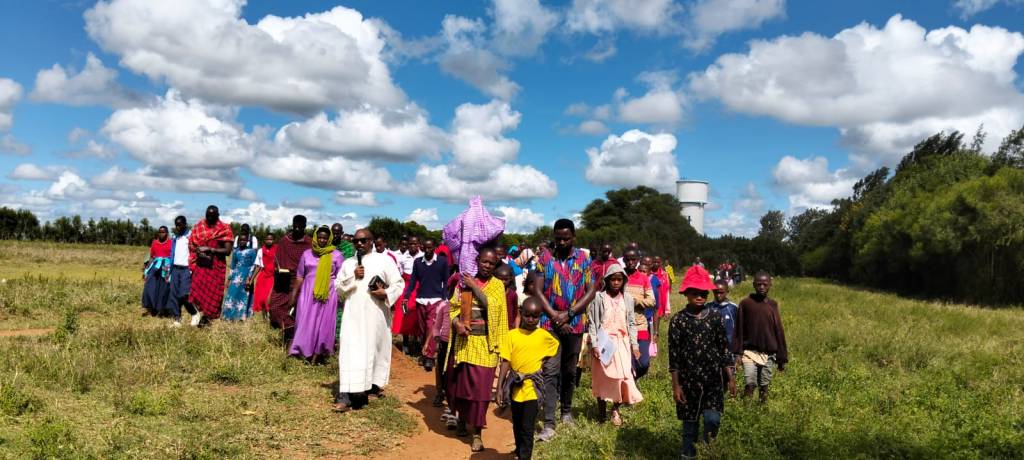
Vigil Mass
Genesis 1:2-2; Genesis 22:1-18; Exodus 14:15-15:1; Isaiah 54:5-14; Isaiah 55:1-11;
Baruch 3:9-15, 32C4:4; Ezekiel 36:16-17, 18-28; Romans 6:3-11); Mathew 28:1-10
Love of all Times
Dear friends, Easter is the most significant moment in the life of all who believe in salvation through Jesus Christ. This is because it commemorates the climax of the manifestation of God’s love for us, his people. During the last week of Lent, i.e., the Holy Week, we experience the intensity of the events that led to our salvation (i.e., the passion and death of Christ) without repeating them. On Easter Vigil, we celebrate the most important night of our Christian life. It is the night in which the world’s fate was restored for once and for all after the fall of the first man, Adam. This was after many attempts by God through the prophets with no avail. By resurrecting from the dead, Jesus opened the doors of eternal life to all willing to enter. Those who lived under oppression by the systems got their consolation, the hopeless regained hope, the broken got healed, the abandoned found a savior, the weak found strength, those who were misled found the truth, and the hated found a friend in the risen Lord. Now we have a choice in our disposition; we can either choose Christ and hope for life everlasting or reject him and be sure of eternal damnation.
During the Vigil Mass, the Scriptures take us through the long history of our salvation to remind us of the trouble God took to bring his people back to himself. In Deuteronomy 6, Moses commanded the Israelites to narrate the events of Passover to their children in all generations. This is what we are all supposed to do for our children. Faith must be planted in the young lives before the world hijacks their minds and curiosity. If the parents are not well-formed in faith, they have nothing to pass over to their children. Later, when they go astray, we blame them and not their parents.
We can say that God created us to save us. However, God did not plan that man and woman should go astray so that he could save them. He gave them the freedom to choose whether to obey or disobey him. When they disobeyed him, he acted swiftly to try to save them. He made clothes from leaves to cover their shame. Jesus becomes the culmination of God’s plan to save his people. He becomes the permanent mark of salvation available to all who would accept Him as the saviour.
The reading from Genesis 1 relates how God created everything in amazing order and crowned all his creation with the making of man and woman. God wanted to share the abundance of his love with man and woman, and so he prepared a place for them. Psalms 104 recounts the marvelous of God’s creation. How often do I sit and count the wonders of God in my life? Or do I only know how to complain about God not doing what I want?
Genesis 22 recounts how God tested the faith of Abraham. After restoring the hope of posterity to the childless old man by giving him a son, God tests his faith by asking him to sacrifice him. Many of us would have defied God’s command and kept the son. We would say better one bird in the hand than 100 in the air. Abraham must have thought that the same God who had blessed him with a son in his old age would certainly be able to give him even more. Therefore, he did not hold back his son from God. Later, God would give us his only Son, Jesus, to die for our salvation. How many times have I held back from God what I call “mine” yet pretend that I am grateful for it in my prayers? Do I give a tithe of all that God has given me, or do I say it is all the fruits of my sweat?
Psalms 16 is a song of confidence in God’s providence. We are called to trust in the plan of God for us without any reservations. How do I know that it is the plan of God that is being executed in my life now? I am confident in God’s providence like Abraham.
The reading from Exodus 14 recounts the pain that the people of Israel went through as they crossed the Red Sea. They were afraid that God had brought them from Egypt so that they would perish at the shores of the Red Sea by the sword of Pharaoh. God never plans disaster for his people but rather uses the opportunity of a looming disaster to manifest his glory. That day, the people of Israel saw the power of God acting in their favor. Then the people sang the song of praise to God for his wonderful deeds. Let us not even for one second think that God has abandoned us to suffer; it is rather we who abandon him and suffer the consequences. God is always on our side, even when we are not on his side.
Isaiah 54 reminds us that sometimes God may seem not concerned about our predicaments, but he is always watching and will never let us be overwhelmed. Even though our pain is brought by our own bad choices, God does not withdraw his mercy and compassion from us. He always wants to rebuild us a new one if we give him a chance. As we read in Psalms 30, if we trust in God, we will always have the final laugh. Our enemies will not prevail over us.
In Isaiah 55, we read that there is an abundance in the Lord’s house. If we listen to God’s words, we will not be confounded because he will make things bearable for us. However, we are urged to take advantage of the moment while it is available. Let us take the courage to act while there is something to be salvaged of our faith, our dignity, and our lives.
Prophet Baruch is explaining to the people the source of their sufferings in captivity. Their lack of prudence and disobedience to God’s commandment make us fall out of his favor and protection, hence we are taken captives by evil. Prudence and virtue are the secrets to prosperity and a long, peaceful life. Psalm 19 tells us that God’s commandments are immaculate and brilliant. They can only bring us good. Do not be deceived that it is out of fashion to be a believer. Faith in God is the only insurance cover for the future we can ever have. All worldly promises and successes are perishable and time-bound. They are matters of trial and error. There is no stable source of happiness on earth.
From the Book of Ezekiel, we are told that the suffering of the Israelites in exile was because of their sins. They had defiled the Holy Name of the Lord by disobeying his commandments. However, God says that he will save them from the Gentiles for the sake of his Holy Name and not for their own merits. The salvation we have is not because we have earned it but rather because God is merciful and loves us.
St. Paul, in the letter to the Romans, reminds us of the real meaning of the death and resurrection of Christ. That in baptism we die in our sins and are resurrected with him to a new life. Psalm 118 tells of the everlasting mercy and goodness of the Lord. Mercifulness and Goodness are part of God’s nature, and he cannot act against his own nature.
The Gospel relates the incredible news of the resurrection. He who was confirmed dead and his tomb heavily guarded has defied death and risen as he had promised. God always keeps his promise. He raised his son from the dead so that we who died with him in sin can be resurrected with him. Jesus was tempted to abandon his mission because of the pain he knew he would experience. However, he took courage in the hope of the promise his father had made to him. We, too, are called to be strong in times of deep suffering and choose the right thing.
Dear friends, the vigil liturgy reminds us of the history of our salvation made possible by the tremendous love of God for us. God intended to align our lives in a way that he will be able to bless us. Just as people squander inherited or gifted wealth that they do not know the pain it took to acquire it, likewise, someone who does not know how the salvation we have today came about may not value it. Those who rush through the catechetical instructions without digesting well end up abandoning their faith. If all who are charged with the responsibility of catechizing the new believers did their job well, we would have faithful believers. It is paramount that parents, catechists, teachers, priests and religious, bishops, and godparents take their responsibilities seriously. Jesus is alive with us, and he wants to share his new life with us. He is telling you, “Peace be with you”
Easter Sunday
Easter Sunday: Acts 10:34a. 37-43; Ps 118; 2 Corinthians 3:1-4; John 20:1-19
The New Dawn
It is interesting to note that when Jesus had risen, he did not go to the City Square in Jerusalem to show himself to those who had killed him. I guess many of us would have done it. Instead, He showed himself to his disciples, whom he entrusted the responsibility to tell the story of his resurrection. If it were today with the mass media, Jesus would not have allowed his resurrection to appear in the headlines with a caption “Breaking News”. This is because it would have been subjected to misinterpretation and misreporting. In fact, the Jewish high priests had already paid the soldiers to tell a different story altogether. Who do I trust to tell the story of my life?
Instead, Jesus wanted the news about his resurrection, be announced and preached by the people who really believed and hoped in him. Peter and the other disciples used a lot of energy to spread the Good News of the risen Christ. They were called imposters and blasphemers, fishermen from Galilee who did not know how to read and write. Two millennia afterward, the Church of Christ is still at pains trying to spread the same message of salvation to the world. Do you think the news stations today would have told the truth about the resurrection of Jesus?
In the Book of Acts, Peter narrates the life of Jesus and the many good things he did to bring salvation to the world. Jesus stood against discrimination of all kinds, cured physical, mental, psychological, and spiritual illnesses, opened the eyes of those discriminated by human traditions and customs, criticized the corrupt authorities, and established a new institution of salvation in his disciples – the Church. Jesus unsettled the status quo. He called out those who ruled the world with corruption, discrimination, and deceit. This made him a lot of enemies. Do you have the courage to call out evil in your community or at your place of work?
Jesus’ triumphant resurrection sealed the new order for those who would be his followers. They would no longer be slaves of traditional customs, corrupt systems, or evil powers. Each one would have the power to choose his or her fate.
St. Paul urges us to act like people who have risen with Christ and not like fakes. Let us not act as though we never knew who Jesus was, because this amounts to betrayal. With him, we rise from the many graves we have dug and entered ourselves. Graves of hatred, jealousy, laziness, corruption, greed, etc., and become alive to true love, justice, peace, activity, and generosity, among others.
Once again, the Gospel presents us with the scenario of the morning of the resurrection. Mary Magdalene, a woman (in the Jewish culture, the testimony of a woman never counted), becomes the first bearer of the great news of the resurrection. She finds the tomb open, and the body of Jesus is missing. Peter and the other disciple, not believing her, ran to the tomb to confirm and found things the way she had reported. It had not yet dawned on them that Jesus had told them he would rise again after three days. They were clouded with fear, hopelessness, and grief. The evil one has lost, and the grave cannot hold life. We are no longer slaves but sons of God because the Son has made us free. Despite this, many today still prefer being slaves to the world to being free in Christ. Are you a slave or free?
My dear friends, the mystery of our salvation, whose climax we reach today, brings us a lot of joy. The Easter period provides us with this incredible liturgy to relive the events of our salvation with renewed spirit and motivation. It impels us to continue to believe, to hope, and to love, knowing that our fate is confirmed if we remain faithful to our calling.
Blessed Easter
Fr. Lawrence Muthee, SVD
 SVD JAMBO KENTAN