
A Brief Overview
Fr. Lawrence Muthee, SVD
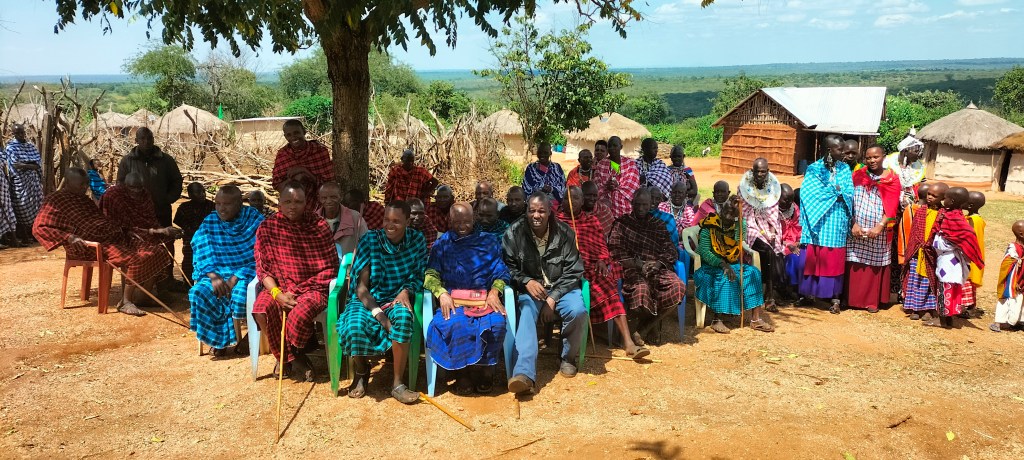
The Maasai People are one of the indigenous tribes found in Kenya and Tanzania. The tribe is of Nilotic descent and came down from South Sudan along the Rift Valley. Some Maasai settled in Kenya and others crossed through Maasai Mara and Serengeti with groups being left and settling on the way until the lower part of the North-Eastern region of Tanzania.
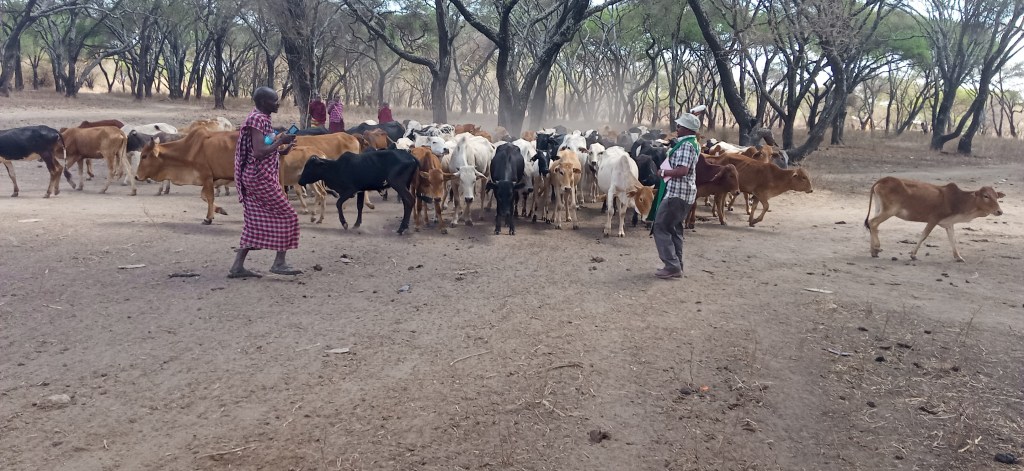
The Maasai people originally were pastoralists and owned big chunks of community land as grazing land. They practiced nomadism in search of graze land. During the colonial period, they lost a lot of that land to the government which was later converted into national parks and game reserves. Due to decreasing land and increasing their population, the Maasai people began not only settling down in semi-permanent and even permanent homesteads but also began practicing farming and other economic activities such as the sale of cattle which was not originally the purpose of keeping the cattle.
Maasai keep cattle mainly for prestige and a sense of worth and the cattle were not meant for slaughtering. They only used milk from cattle and slaughtered animals during big feasts, when someone was seeking to get fat (believed to contain instant strength), and when a woman delivered to give them instant energy to be able to lactate. It should be noted that during pregnancy, women are starved so that the fetus may not grow too big causing complications during delivery. Even though there are many more health facilities today than twenty years ago, the majority of women deliver at home with the help of Traditional Birth Attendants (TBA). They only seek health care when there is a complication during delivery or with newborn babies.
The economic system among the Maasai people which is mainly built upon cattle and land is dominated by men. Women do not have any source of income and they depend on their men for everything. After circumcision, men acquire high dignity and no longer must do manual work like gracing which is left to young boys known as layoni. Women are the ones who do hard labor in the homestead which includes milking, cooking all the meals, feeding the calves, fetching water and firewood normally from very far distances, washing clothes, building houses (sealing the walls made of sticks with mud and cow dung, and thatching the roof with grass (today, due to prolonged drought they are opting for steel roofing sheets).
About marriage: it is the responsibility of the parents to look for the first wife for their sons. They normally look for a small girl about 10-12 years and after paying dowry they bring her home to groom (in their image and likeness) her and hand over to their son. This explains that child marriage and the readiness of a girl to start giving birth is not the age but the body size. As soon as she grows breasts, she is deemed ready to get pregnant even though she is 12 years old.
Since young men have no say in the choice of the girl, many end up marrying and being married to people that they are not compatible with and there is nothing they can do. however, the culture allows men to get the second, third, fourth,… of their own choice and this explains partly why men marry more than one wife. Other wives are added either to grow wealth or take care of the many cows. Other reasons for marriage many wives include family planning and risk mitigation, in case one doesn’t bear children or dies. There is a legend that says that during the migration from South Sudan, the Maasai people had to fight other tribes on the way due to conflict over farmland and grazing land. Since men always left women and children behind first as they made the migration path, many of them were killed. As a result, there were more women than men, and therefore men were forced to marry many wives to balance.
There are other traditions and customs practiced by the Maa people whose origin was practical purposes but later became traditional practice. Some of these include removing the front lower 6 teeth which was meant for giving medicine and fluids in case of tetanus infection, burning of the cheeks and forehead to deflate swollen eyes due to infection, etc. The Maasai men also carry a sword and a stick used in ancient days to make their way through the bushes and drive away snakes and wild animals. Today the sword is used for cutting meat and shrubs to fence the cattle shed.
The Maasai age group hierarchy is very elaborate, and one is accorded dignity first by age, then the position held and wealth. The community is divided into clans with a king governing the affairs of their respective clans. Life revolves around the clan, and one has to adhere to the values and traditions respective of his or her clan.
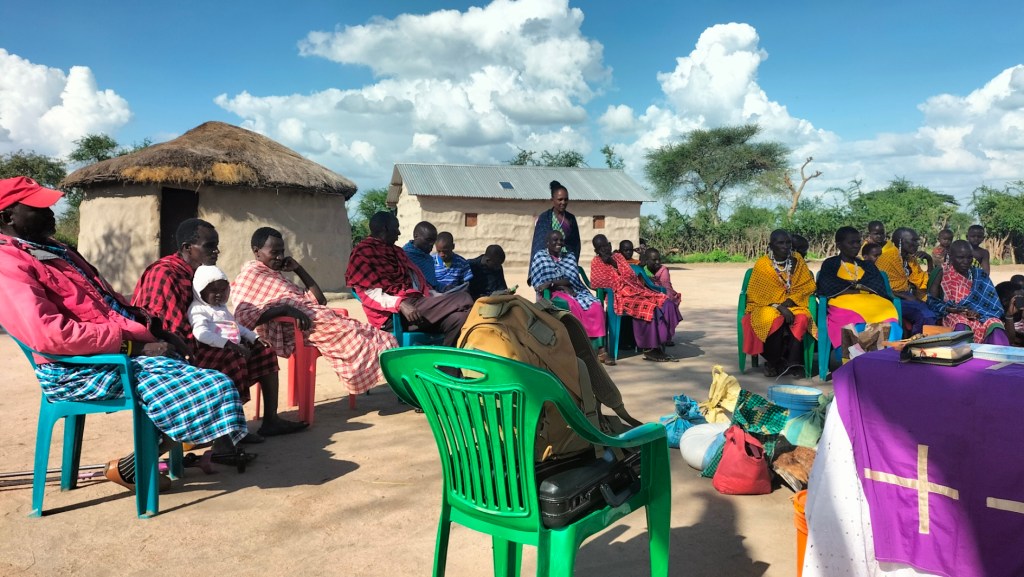
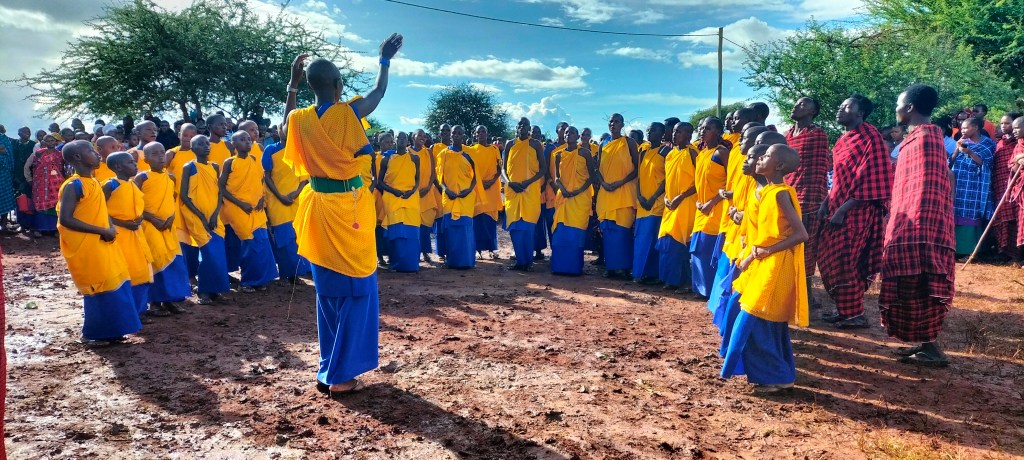
The dress also is determined by one’s age. For women, little girls wear two pieces of clothes tied around their necks and dropping to each side while little boys only have one. Bigger girls wear up to four pieces and adult women up to 6 pieces. Men wear from three to four or five pieces. Today most men wear shorts inside and during the colonial and post-colonial times, men were not allowed to go to the cities or big towns without one. So, the legend goes that there used to be only one short in the entire district and men would wait for weeks to get it so that they could go to town.
Since the Maasai men do not do hard chores apart from grazing, they likewise do not mind three meals a day and therefore many do not have stamina for heavy-duty activities such as digging or lifting heavy parcels. Men spend most of their time walking from one place to another or talking. Therefore, they have perfected the art of politics and they like meetings. A small matter may take three days to resolve. They can also walk long distances without getting tired.
Globalization and the rapid spreading of technology have invaded the Maasai lifestyle. Today mobile phone penetration is about 60% among adults. Many homesteads own a motorcycle and almost every homestead has a small solar lighting and mobile phone charging system. You will not be surprised to see TV satellite discs on the grass-thatched mud houses here and there.
Very few adults have formal education but today more than 65% of children attend primary school. About 30% of these join secondary schools and 10% tertiary institutions.
Many are baptized Christians but since traditional customs are still very strong and heavier than faith, the majority practice syncretism with the Christian faith getting about 20-40% adherence and the rest is taken up by traditions. This is because the initial evangelizers presented Christianity as a once-per-week (Sunday) affair. The rest of the week people practice their traditions, and it is difficult to tell them not to because there will be a gap in their lifestyle that needs to be filled.
It is good to note that the above description is based on personal experience and observation having worked with the Maasai people for more than 4 consecutive years as a Parish Priest and a scientific study conducted for my master’s degree research paper. The historical information is from in-depth interviews with elderly people. There are many exceptions to the general observations in different areas depending on how and when different communities are exposed to modernization.
 SVD JAMBO KENTAN