

Sunday Readings in Brief
16th Sunday A
Readings Wis 12:13.16-19; Ps 86; Rom 8:26-27; Mt 13:24-43
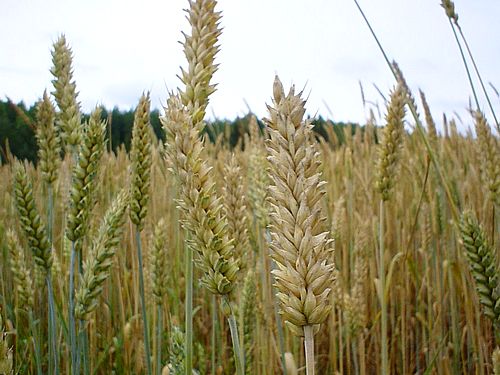
Dear friends, today is the 16th Sunday in Ordinary time. We are almost in the middle of this season. We continue to learn from Jesus the tenets of the kingdom of God. Today again Jesus himself expounds to his disciple just as he did last Sunday about the parable of the “Sower”. His disciples had asked him to explain to them the parable of the weeds also known as the parable of the wheat and the weeds. This is the breakdown of the parable for those who may not have read the Gospel:
- The sower sowed good seed in his field,
- Then enemy went at night and sowed weeds in the same field,
- The shocking discovery of the weeds by the servant when the weeds grew,
- The servants seek permission to remove the weeds,
- The wise decision by the owner of the field was not to remove them so as not to uproot the wheat with the weeds but permit them to grow together.
- The time of harvest when the wheat and the weeds are separated.
- The destiny of the wheat is preservation in the store and that of the weeds is burning in the fire.
At the beginning of the parable, we are not told what kind of seed it was but later we discover that the seed was wheat. Just as the names rhyme ‘wheat and weed’, the weeds that grow in the wheat fields are very similar to the wheat itself. Unless you are a keen farmer like those servants, you may not notice. You can actually not tell them apart before the ears have emerged. This is where they start showing the difference.
Those who have seen the wheat fields know that it is not like the other grains such as maize and beans that one can weed out the unwanted plants. There is no space left between the wheat plants to weed. The roots of the wheat and weed plants are always very close such that if you pluck out one you risk plucking the other as well.
Jesus is presenting this susceptible situation to us today. Jesus gives this explanation about the wheat and weeds:
- The sower is the son of man – Jesus himself who comes to sow the Good News of the Kingdom of God.
- The field is the world, the communities where we live.
- The good seed is the sons of the kingdom – those who have accepted the Good News and are growing righteousness.
- The weeds are the sons of wickedness – those who, instigated by the evil one, are opposed to the Good News.
- In addition, the enemy is the devil – whose business is to turn us into his agents to ruin and destroy others.
- The harvest is the Judgment day – when everyone will account for his or her own deeds.
- In addition, the reapers are the angels – very neutral and do not favour or take bribes.
In our own society and communities, we find this scenario more often than not. There are those who struggle for peace and justice. Those who take responsibilities given to them seriously. Those parents who take good care of their children. Those leaders who actually work towards the development of the communities they lead. Religious leaders who are genuinely committed to transforming the lives of the people and not looking for popularity. Nevertheless, there is no shortage of those sons and daughters of the devil whose business is that of their master himself, destructors of peace. They have allowed the devil to nest in their hearts. They do not rest day and night planning and executing commotion in communities. They are enemies of the progress and development of others. They see wrong in everything.
Today Jesus is telling us what will happen to such. God, our wise and loving Father, has a lot of patience and cares about his people. As Christians, we behave like servants. We want to pluck out those among us who have sold their souls to the devil. We have little patience with our brothers and sisters who go astray. Many times, we end up causing a lot of collateral damage wanting to uproot them from our midst. Today we are being told to be patient with everyone, including the weeds in our communities. We need to learn how to live wisely with the merchants of hatred and destructors of peace in our communities who are agents of the evil one. The gossips, the negative critics, and those who dig holes in our path.
The devil will always look for the weak in faith to turn them against their own community. These people will always be present especially in our small Christian communities and in our Churches. Their main assignment is to ensure our communities do not grow in faith. Any one of us could be turned if not careful. The evil one is wise; he will make us think that we are doing the right thing while we are causing everyone else to stumble. However, with our patience, we can learn how to progress and instead of uprooting the weeds, we can take them as the living test of our commitments. With the help of Jesus, we could instead influence them to repent. If the evil does not take the chances given to repent, the day of separation will come. Let us leave judgment to the only just Judge as we read in the first reading today. God himself is the only just judge who gives repentance to his people as we are told in the first reading.
Jesus added two more parables: the mustard seed and the leaven. This shows us that no matter how small the beginning might be, given time and proper conditions, the kingdom of God always grows and permeates all and benefits many. We need not be discouraged in our own mission. Even when we feel very small and powerless in the face of giant responsibilities and difficulties. We need to have patience and perseverance. Let us not be swift to pass judgment or condemn others. We may be the weeds that are supposed to be removed.
Dear friends, more often than not, we think that it is others who are agents of the evil one and we are the victims. This is because we do not take time to reflect and see if we too have entered into partnership with him without knowing. The challenge is that evil is always disguised as good. We need to inform and form our conscience to be able to identify the tricks of the devil.
As we pray for patience today, let us remember that on our own we are incapable of praying well. St. Paul reminds us that it is the Spirit of God in us that prays on our behalf. He knows our needs.
Have a fruitful Sunday.
Fr. Lawrence Muthee, SVD
 SVD JAMBO KENTAN